
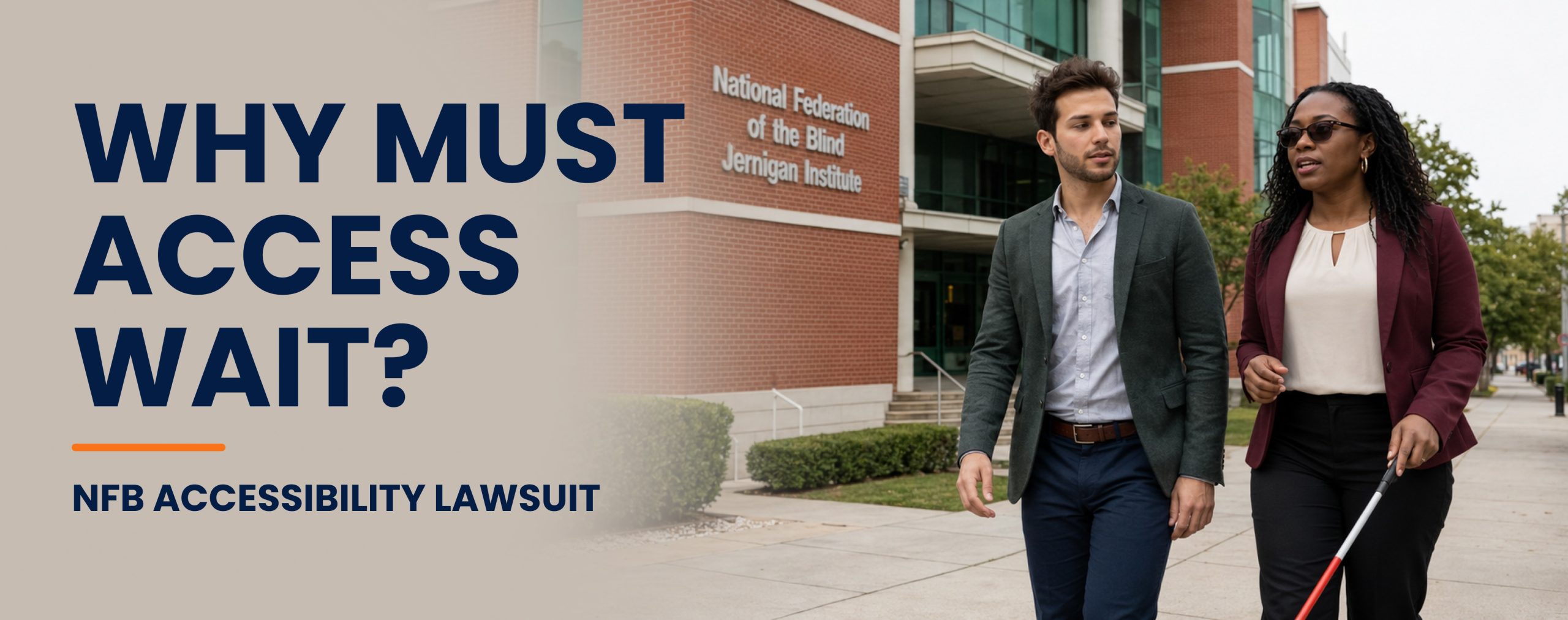
In response to growing concerns over delayed enforcement of federal accessibility regulations, the National Federation of the Blind has taken legal action against the Trump-Vance administration, arguing that postponing critical accessibility protections undermines the rights guaranteed under the Americans with Disabilities Act (ADA).
Filed on May 21, the lawsuit represents a significant moment in the ongoing fight for equal online access and highlights the broader implications of delayed accessibility compliance across public and private sectors.
Understanding the Lawsuit
The lawsuit centers on delays to critical website and mobile accessibility protections under the Americans with Disabilities Act (ADA). The Department of Justice had previously finalized rules requiring state and local government websites and applications to meet modern accessibility standards designed to support individuals with disabilities, particularly those who are blind or visually impaired. These standards were intended to remove digital barriers and ensure equal access to essential public services.
However, recent administrative decisions postponed compliance deadlines, citing concerns about staffing shortages, limited technical resources, and implementation challenges among organizations required to comply.
For individuals who depend on screen readers and other assistive technologies, inaccessible websites can create serious barriers to completing everyday tasks, including paying bills, applying for jobs, accessing school resources, scheduling medical appointments, or obtaining government assistance.
The issue extends far beyond government websites. Across industries, inaccessible digital experiences continue to impact millions of users. Common accessibility problems include missing alternative text for images, poor keyboard navigation, forms that do not function properly with screen readers, videos without captions, and documents that assistive technologies cannot interpret. These barriers limit independence and reduce equal participation in an increasingly digital world.
The lawsuit also highlights the growing legal and financial risks associated with ignoring accessibility. Businesses and public organizations are facing increased scrutiny regarding ADA compliance, with accessibility-related lawsuits steadily rising across the U.S.
Companies that fail to prioritize accessibility may encounter legal disputes, reputational damage, customer dissatisfaction, and lost revenue opportunities. At the same time, organizations that invest in accessible digital experiences often benefit from improved usability, stronger search engine performance, better mobile experiences, and broader audience engagement.
The National Federation of the Blind’s lawsuit serves as a reminder that delayed accessibility protections have real-world consequences for millions of people. Organizations that continue postponing accessibility improvements may find themselves increasingly vulnerable to legal action and public criticism as awareness surrounding digital inclusion continues to grow.
Creating Inclusive Websites
Businesses looking to stay ahead of evolving accessibility standards should take proactive steps toward creating inclusive digital experiences now rather than waiting for additional regulatory pressure. This is where EcomBack services can provide significant value.
EcomBack helps organizations improve digital accessibility, optimize user experiences, and build compliant websites that align with accessibility standards. From accessibility audits and website improvements to ongoing technical support and inclusive design solutions, EcomBack enables businesses to create digital environments that are accessible to all users while reducing compliance risks and enhancing customer satisfaction.
As accessibility becomes an increasingly important part of digital success, partnering with experienced providers like EcomBack can help businesses build stronger, more inclusive online experiences for the future.


