
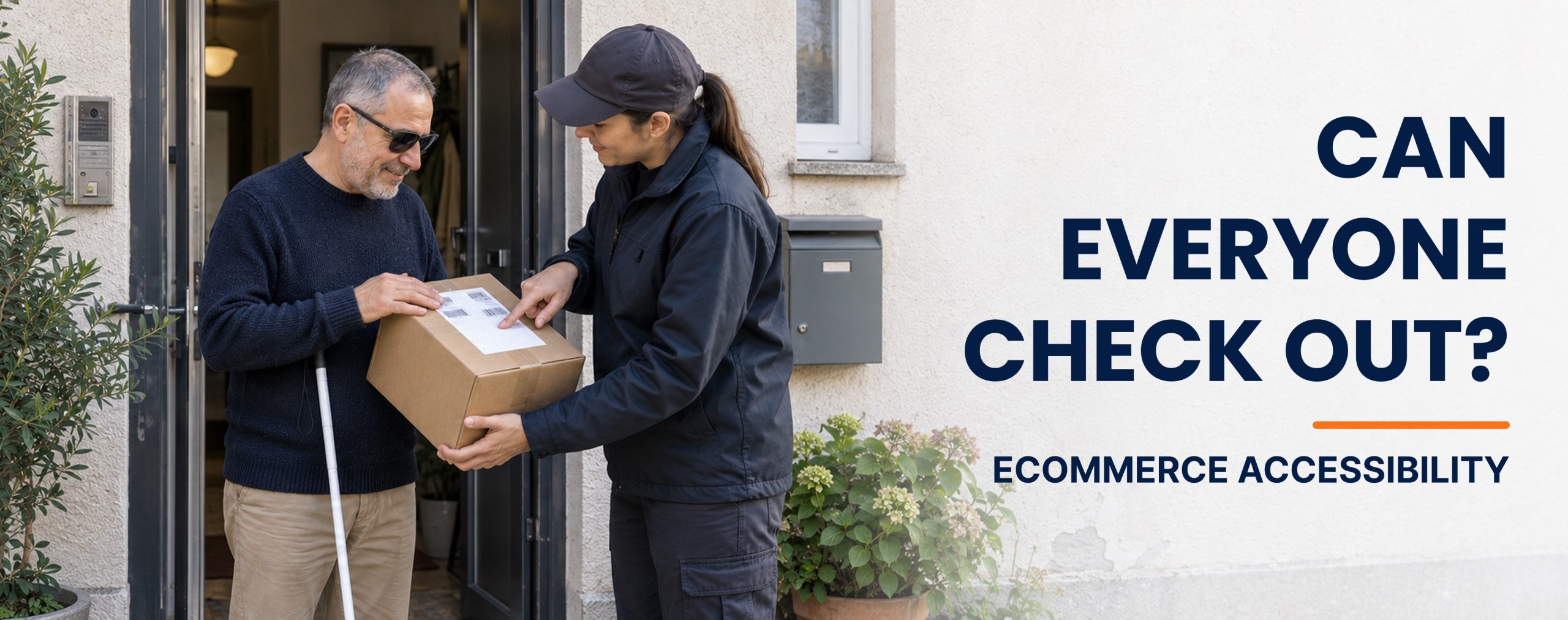
The European Accessibility Act (EAA) sets standards to ensure that products and services, including ecommerce websites, are accessible to people with disabilities. Compliance is mandatory for most online businesses operating in the European Union. The legal consequences of non-compliance with the EAA can vary but can lead to fines and legal action as well as reputational damage.
Here’s what you need to know to make your ecommerce business compliant.
Understand the Scope of the EAA
The EAA covers electronic communications, websites, mobile apps, and digital services. For ecommerce, this means your website or app must be usable by people with various disabilities, such as visual, auditory, motor, or cognitive impairments.
Websites and apps must:
- Provide text alternatives for non-text content.
- Ensure all functions are available via keyboard navigation.
- Offer clear and consistent navigation.
- Make forms accessible with labels and instructions.
- Structure content with proper headings.
- Ensure color contrast meets minimum standards.
- Add alt text to images and descriptive links.
- Make all interactive elements keyboard-accessible.
- Ensure compatibility with screen readers.
- And overall implement WCAG 2.1 Level AA Guidelines.
Making Ecommerce Accessible: Key Areas to Address
Ecommerce websites present unique accessibility challenges. To ensure your online store complies with the EAA and serves all customers effectively, focus on these critical areas:
- Product Listings and Images: Provide descriptive alt text for all product images. Ensure product information (price, description, availability) is accessible to screen readers.
- Shopping Cart and Checkout: All interactive elements (add to cart, quantity selection, payment fields) must be keyboard accessible and properly labeled. Error messages should be clear and accessible.
- Navigation and Search: Offer simple and consistent navigation. Search bars, filters, and category menus must be accessible by keyboard and screen reader.
- Promotions and Pop-Ups: Make sure any promotional banners, pop-ups, or modals are accessible and do not block navigation for users with assistive technologies.
- Customer Account and Registration: Forms for account creation, login, and password recovery need proper labels, instructions, and error feedback for accessibility.
- Order Tracking and Support: Order status, tracking information, and customer support channels should be easy to find, operate, and understand for everyone.
Start Taking the Necessary Steps to Achieve Compliance
To comply with the EAA, ecommerce business owners should audit their digital platforms against accessibility standards, engage users with disabilities for testing, make necessary technical and content updates, train staff on accessibility best practices, and maintain ongoing compliance.
At Ecomback, we can help you take these steps to not only fulfill legal obligations but also broaden your customer base and improves usability for everyone.


