
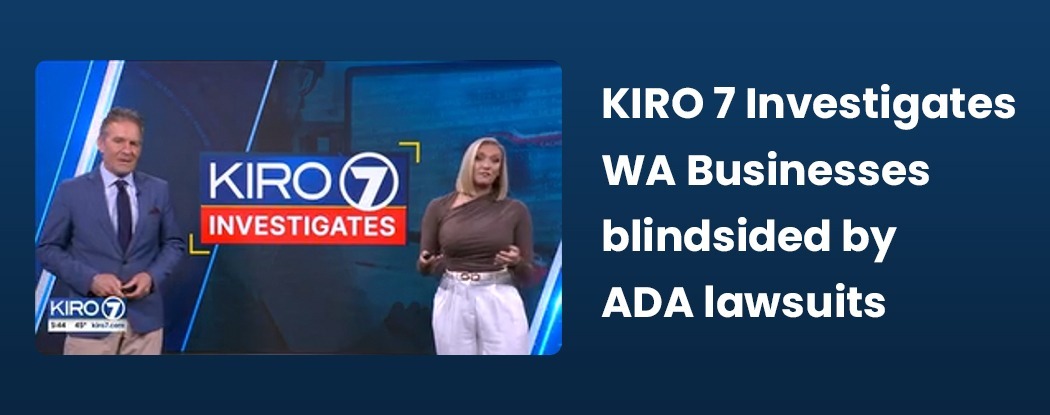
In a recent interview with KIRO 7, Nayan Padrai, CEO of EcomBack, delivered a warning to businesses navigating today’s digital economy. “I am morally aghast by what is going on,” Padrai said, reflecting on the surge of website accessibility lawsuits being filed against companies across Washington and the U.S. (For context, nearly 4,000 lawsuits were filed in 2025, per our latest report.)
These lawsuits focus on alleged violations of the Americans with Disabilities Act (ADA), a landmark civil rights law that courts have increasingly applied to websites. Websites must be accessible to individuals with disabilities, meaning they must incorporate features such as properly labeled images, structured headings, accessible forms, and easy navigation.
During the interview, Padrai argued that clearer federal standards are needed to eliminate ambiguity around website requirements under the ADA and to curb what he views as exploitative legal tactics. “The motive is profit,” he asserted. “And wherever you have a profit motive, you’re going to find creative ways to make a profit.”
The scope of litigation has been broad. Major Washington-based brands such as Starbucks, Nordstrom, Zumiez, Outdoor Research, Eddie Bauer, and Tommy Bahama have all faced lawsuits.
Smaller businesses have also been targeted. Shir Donovick, founder of apparel company Sheer the Brand, was hit with a lawsuit alleging ADA violations related to her website. In her case, prior upgrades and a strong legal response led to dismissal. Many others, however, face costly settlements or prolonged legal battles.
Why Web Accessibility Matters Now
The message for businesses is clear: web accessibility can no longer be ignored. Prevention costs are significantly lower than the cost of defending against lawsuits. Beyond legal exposure, accessible websites improve user experience, expand customer reach, and demonstrate a commitment to inclusion.
EcomBack offers accessibility audits, remediation services, ongoing monitoring, and strategic guidance to help businesses align with recognized standards and reduce risk. Rather than waiting for a demand letter, business owners can take proactive steps to ensure their digital presence is inclusive and compliant.
See the full interview here and join the conversation.


