
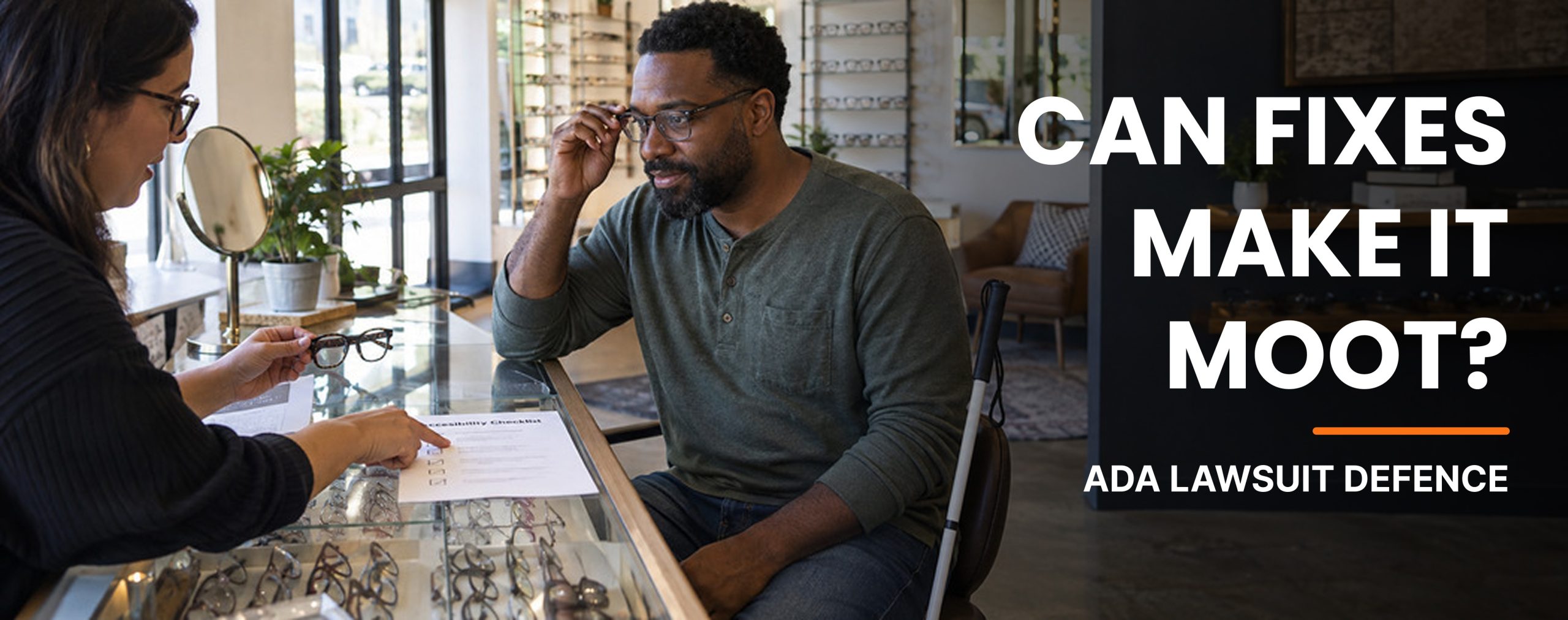
In a recent decision in Jones v. Moscot.com, LLC, from the United States District Court for the Southern District of New York, plaintiff Clay Lee Jones, who is visually impaired and legally blind person, sued an eyewear company Moscot, alleging its website had missing alternative text, improperly structured content, unclear labeling, inaccessible interactive elements, and other common barriers, which prevented the completion of an online purchase.
However, the defendant’s response distinguished itself not by disputing the importance of accessibility, but by demonstrating that it had already taken substantial, proactive measures to address it.
Specifically, the defendant presented evidence that it had engaged a qualified digital accessibility consultant well before the initiation of the lawsuit, and that it had implemented a structured, ongoing program of auditing, testing, and remediation. The company further showed that its website had achieved high accessibility ratings relative to comparable e-commerce platforms and that it maintained a continuing commitment to improvement. Importantly, upon receiving the complaint, the defendant did not rely solely on its prior efforts; it also conducted a targeted review of the alleged issues, confirmed that no material barriers prevented the transaction in question, and promptly resolved even minor deficiencies that were identified.
This evidentiary showing proved decisive. The court applied the doctrine of mootness, specifically within the framework of voluntary cessation, to determine whether there remained a live controversy requiring judicial intervention. Under this doctrine, a defendant must demonstrate that the challenged conduct has been fully addressed and that there is no reasonable expectation the alleged violations will recur. In this instance, the court found that the defendant had satisfied that burden. The combination of prior investment, expert validation, responsive remediation, and forward-looking compliance measures established that the alleged barriers had been effectively resolved.
Equally significant was the absence of countervailing evidence from the plaintiff. Rather than submitting declarations, expert analysis, or technical findings to challenge the defendant’s assertions, the plaintiff relied primarily on procedural arguments regarding the admissibility of evidence outside the pleadings. The lack of substantive rebuttal ultimately reinforced the court’s conclusion that no active dispute remained.
Why Businesses Should Care About Best Accessibility Practices
For businesses, this decision underscores a critical reality: accessibility is not solely a compliance obligation; it is also a powerful component of legal risk management. When organizations invest in accessibility proactively, such as engaging qualified experts (like EcomBack), conducting regular audits, implementing remediation protocols, and maintaining detailed documentation, they position themselves to demonstrate that they are already meeting the very obligations a court would otherwise impose. In such circumstances, litigation loses much of its practical leverage.
Documentation, in particular, emerges as a decisive factor. General statements of intent or informal efforts are rarely sufficient in a legal context. What carries weight is demonstrable evidence: audit reports, remediation records, accessibility roadmaps, and third-party validations. These materials transform accessibility from an abstract commitment into a verifiable, defensible practice. They allow businesses to substantiate not only that improvements have been made, but that those improvements are systematic, ongoing, and unlikely to be reversed.
Additionally, courts evaluating mootness and similar defenses will look not only at whether past issues have been corrected, but also at whether the defendant has implemented processes to prevent future barriers. Continuous monitoring and periodic testing are therefore essential for sustaining a credible legal position.
Accessibility as an Ongoing Commitment
At EcomBack, our mission is to empower businesses to create and maintain inclusive digital experiences that are accessible to all users, regardless of ability. We partner with organizations to proactively identify, remediate, and prevent accessibility barriers, aligning their websites with recognized standards such as WCAG while supporting long-term compliance and usability.
Through a combination of expert guidance, continuous monitoring, and practical implementation, we help our clients move beyond reactive fixes toward sustainable accessibility practices. Our goal is not only to reduce legal risk, but to ensure that accessibility becomes an integral part of how digital products are designed, developed, and maintained.
We believe that when accessibility is approached as an ongoing commitment—supported by clear documentation, measurable progress, and accountability—businesses are better positioned to serve their customers, strengthen their brand, and confidently meet evolving regulatory expectations.
Disclaimer: This blog is for informational purposes only and does not constitute legal advice.
EcomBack is not a law firm. Readers should consult a qualified attorney regarding legal obligations related to accessibility compliance.


